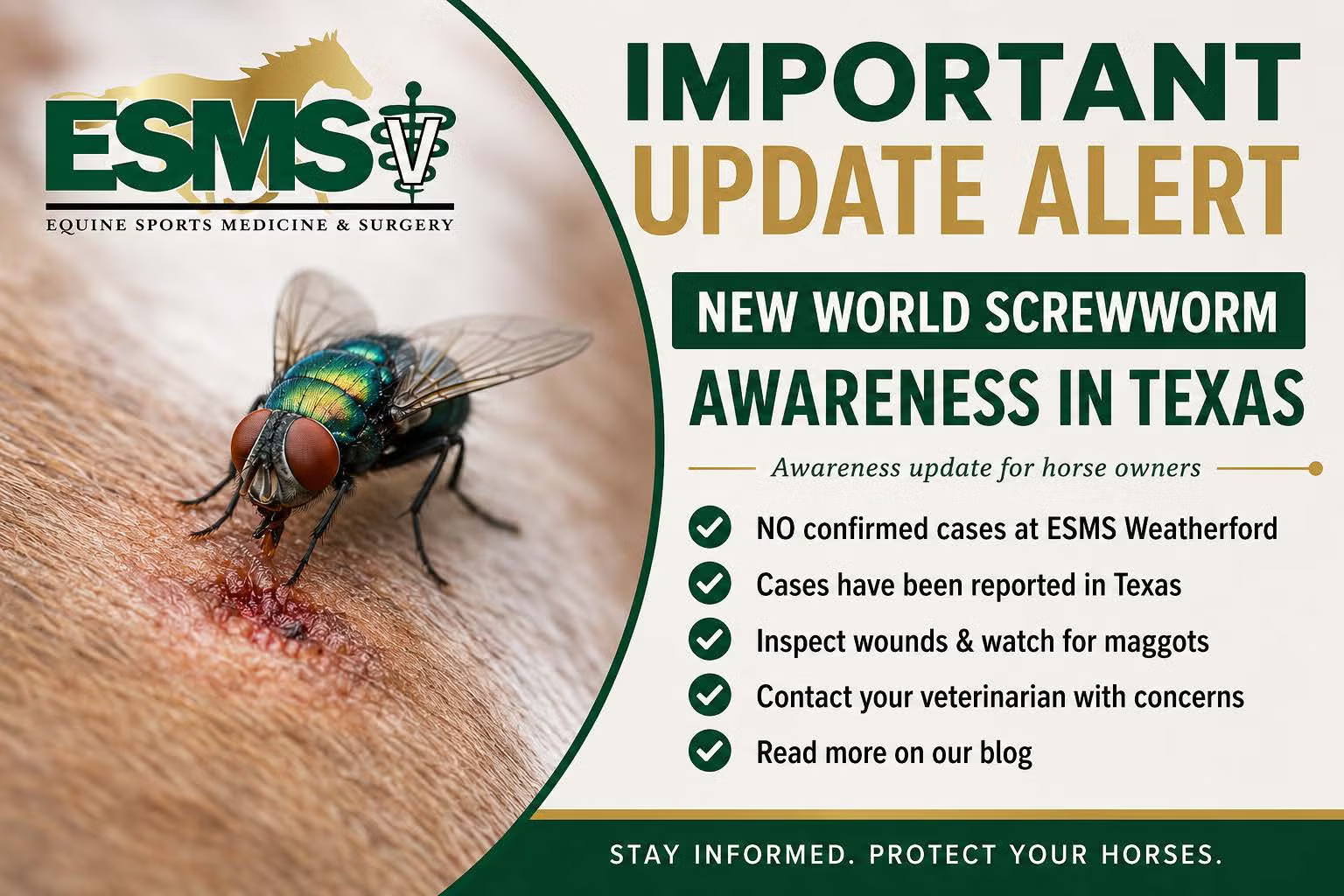
 New World Screwworm confirmed in Texas
|
Current Status: |
|
4 cases |
|
Affected counties: Zavala & La Salle County; Gillespie County (6/8/2026) |
|
Other counties in quarantine: Webb & Uvalde County |
|
Previously reported canine case in Andrews County, updated to New Mexico (Lea County) |
|
***Considered active quarantine zones with no animal movement without prior TAHC authorization |
|
Interstate travel (CVI/Health Certificate): |
|
|
|
New World Screwworms (NWS) larvae are maggots of the fly Cochliomyia hominivorax, which is known to lay eggs on open wounds or orifices of live tissue. As the eggs hatch, they continue to destroy healthy tissue, causing larger wounds and damaging the area. NWS can affect all warm-blooded animals, including horses, cattle, sheep, goats, dogs, cats, and wildlife.
Clinical signs to watch out for:
- Draining or enlarging wounds
- Maggots
- Lesions around orifices (ears, nose, genital area, and umbilicus in newborns)
- Irritation, rubbing of wounds
Temperature and fly activity
- NWS is a tropical fly, and its activity is temperature-dependent
- High risk: 80°+F, 30-70% relative humidity (2-3 weeks life cycle)
- Moderate risk: Temperate weather (3-4 weeks life cycle)
- Low risk: Below 59°F (2-3 months or less active life cycle)
- Current conditions are ideal for NWS activity.
- Central and North Texas may see slowing activity in the winter months. South Texas may experience year-round risk.

Table: Average high and low temperatures (°F) across the year for central Texas, 2000-2024.
Texas A&M AgriLife Extension.
Suspected cases
If you suspect a case, contact your veterinarian immediately. The larvae/maggots may be used to accurately identify the species involved.
DO NOT MOVE THE ANIMAL OR OTHER ANIMALS
Follow the guidelines set by your veterinarian and the Texas animal health commission (TAHC), or your local state health officials
Treatments
Currently approved treatments include:
- Dectomax (doramectin) can be used for treatment and prevention in horses (>1 year of age)
- Negasunt Powder (comuaphos, propoxur, and sulfaminide topical powder) can be used for prevention and treatment (limited distribution to USDA)
- Ivermectin may be effective in prevention
- F10 Antiseptic wound spray with insecticide (benzalkonium chloride, polyhexanide, and cypermethrin topical solution) can be used for prevention and treatment
Prevention
- Keep any open wounds cleaned and covered.
- Work closely with your local veterinarian and follow all state guidelines.

Image: AAEP, Alert to Equine Practitioners: New World Screwworm Enters The United States.
Resources:
- Texas Animal Health Commission (TAHC), www.tahc.texas.gov
- USDA, www.aphis.usda.gov
- FDA, www.fda.gov
- American Association of Equine Practitioners (AAEP), www.aaep.org